“Why are you doubting these young girls and women?”
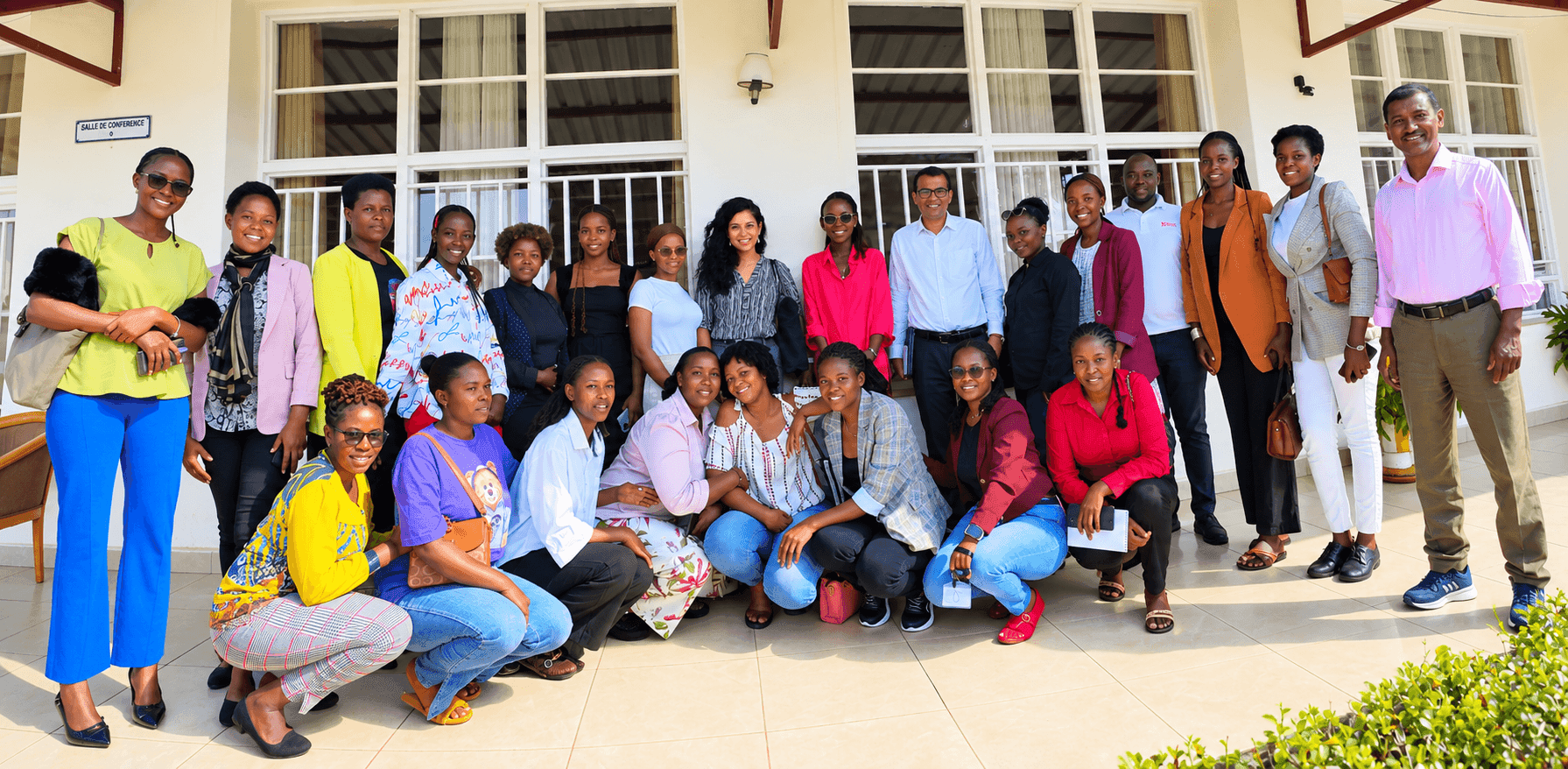
That was the question BRAC Rwanda Microfinance Company's CEO, Upoma Antara Husain, put to the room during a meeting on 8 September 2026 at Saint André Hotel in Kabgayi.
Around the table sat the Head of Programmes, three Regional Managers, a Regional Accountant and twenty Credit Officers—the frontline staff working directly with nearly 10,000 young women across hundreds of savings groups.
The CEO encouraged them to speak openly about what was working, what was not, and what was making their work difficult. Because, she said, open conversations were the only way to get to the root of the challenges.
What “transitioning” means
The AIM Program, known as Accelerating Impact for Young Women in partnership with BRAC, helps adolescent girls and young women build financial knowledge, skills, confidence and entrepreneurial capability through community-based clubs.
The goal is for participants to eventually move on—or “transition”—into full, regulated microfinance for effective financial inclusion: receiving Financial Literacy Training (FLT), opening formal savings accounts, joining Saving Groups and, in time, accessing credit to grow their businesses. That move from AIM to microfinance is the pathway this story is about.
When the first attempt fell short
The first attempt did not go as planned. Around 800 participants from the first and second cohorts (2023 to 2024) made the move, but fewer than half are actively depositing today. Their combined savings stand at only around USD 4,000, mobilised since January 2025—well short of BRAC Rwanda's own target for this group.
Rather than continue with a result that fell short, the team asked why and changed course. Two gaps stood out.
First, no one was specifically dedicated to supporting this group of clients once they moved into microfinance. Second, the informal Savings and Loan Groups also known through the infamous acronym of VSLA —which were intended to be a stepping stone towards microfinance—had instead become a comfortable endpoint, preventing the girls and women from joining and taking up microfinance services.
In November 2025, BRAC Rwanda addressed these two gaps by assigning twenty Credit Officers exclusively to the next cohort, Cohort 3, and moving participants directly into BRAC Microfinance Saving Groups. Membership and passbook costs were also covered, removing a barrier to joining.
The results spoke for themselves. Since March, around 9,670 clients have joined MF Saving Groups, and to date they have saved more than ten times what participants in Cohorts 1 and 2 had mobilised, despite doing so in a fraction of the time.
The numbers are encouraging. But for the people working closest to the clients, the real change could be seen in something more important: behaviour.
Two views from the frontline
For Credit Officer Ishimwe Sandrine in Ruhango, the numbers have faces. One client—once sceptical of BRAC and, perhaps more importantly, sceptical of herself—was elected president of her MF Saving Group. Months later, she had become one of Sandrine's strongest savers, encouraging other members to do the same.
“Her mind has drastically changed. She is so positive, she saves regularly and encourages all the members to do so. I am so proud of the empowered person she has become,” Sandrine says. Her advice to fellow Credit Officers is a philosophy in itself: “Be solution-seekers, not people who dwell on the challenges.”
Sandrine was not previously involved in the transition of Cohorts 1 and 2. But she believes that putting dedicated Credit Officers in charge of introducing the young women and girls to a culture of saving—and providing Financial Literacy Training before they begin accessing credit—could not have been a better approach.
A Credit Officer already managing borrowers, she explains, would struggle to give these young women and girls the attention they need. “One has to create sufficient room to talk to these clients individually,” she says.
That individual attention matters because transition is not simply about moving a client from one programme to another. It is about helping her build the confidence, habits and financial capability to take the next step.
A supervisor sees the same transformation
Regional Manager Bakiul Islam, who oversees the transition across the Muhanga Microfinance Region, sees the same shift from almost the same angle as his Credit Officers. Having worked in BRAC's microfinance operations across three countries—Bangladesh, Tanzania and Rwanda—for the last 22 years, he brings an experienced perspective on transitioning participants from development programmes such as UPG and AIM into financial-oriented development through BRAC Microfinance.
“When you look at Cohorts 1, 2 and 3, you find a huge difference. With BRAC Rwanda's innovative approach of introducing dedicated Credit Officers, we have staff who only look after the transitioning girls and women—this is a great initiative.”
For him, however, the most telling sign is not the headline number of clients admitted, but their behaviour. “The vast majority of these young girls and women are transacting by depositing their savings. This shows their interest in working with a formal financial institution, and this is a great sign for me.”
For Bakiul, regular saving is more than a transaction. It is an early indication that these young women are beginning to engage with formal financial services—and that BRAC can continue building that relationship over time.
No room to relax
Head of Programmes Rezaul Karim reminded the room that progress is no reason to ease up. “Do not relax. The potential is huge and the task ahead is big. We need to prepare ourselves to support these girls with all the services available, including credit. When the time comes, let us not present excuses but solutions.”
Coordination towards what Rezaul recommended is already happening. AIM Regional Managers Odila Umuziranenge and Emmanuel Mugema, who work alongside the Credit Officers, Programme Officers and their supervisors on the ground, point to the quarterly coordination meetings that bring AIM and microfinance frontliners together.
“We are ready to support our staff as much as we can. We are already in a great relationship because we meet these young girls and women together when they are also nurthuring their recently started businesses, and bring back their cost-sharing installments. We discuss most of the challenges during our coordination meetings, which bring together AIM and MF frontliners at least once a quarter. We talk about serving the girls and women at the fullest.”
The transition is therefore becoming a shared responsibility—not simply the responsibility of the Credit Officers assigned to it.
Believing in the people we serve
The work is not finished. Some clients still need extra support to keep saving and remain engaged. The teams are enthusiastic and want to do more. For example, they have committed to adding home visits as a more sustainable follow-up mechanism for girls and women who may be struggling to remain active.
But the question the CEO put to the room on 8 September was ultimately bigger than savings targets, group formation or credit readiness.
It was a challenge to everyone working in development: Have confidence in the people you serve. Give them the tools. Support them. And give them the opportunity to show what they can do.
We had once questioned whether these young women would embrace cost-sharing for livelihood support. They did.
The team later questioned whether they would be able to save. They are now collectively mobilising more than USD 40,000—and the number continues to grow.
And as the team begins thinking about their readiness for credit, the CEO's message is to resist the temptation to decide too early what these young women cannot do. “Believe in them. Serve them. Empower them,” she says.
Nearly 10,000 women are already answering that challenge with their savings. The next question is bigger:
How far can they go if we continue to believe in them?
BRAC Rwanda Microfinance Company PLC is licensed by the National Bank of Rwanda and currently serves clients across 34 branches nationwide.